Case study: Securi-Flex® - Extending Fire Survival Expectations in High-Rise Residential Design
The UK’s high occupancy landscape has changed significantly over the past two decades. High-rise living and occupancy are no longer confined to just commercial properties; it has become a central component of urban housing strategy.
More than 50% of homes built in London since 2002 are flats within high-occupancy developments. The UK now has a growing number of buildings exceeding 150 metres, and over 90% of buildings in the current development pipeline are residential, which are collectively expected to deliver around 100,000 new homes.
As vertical living and occupancy rates expand, so too does the complexity of fire safety design. Evacuation strategies, firefighting access, smoke control systems and communication networks must all function effectively in environments where building height, density and phased evacuation can be prolonged for extended periods. This raises an important question: do traditional fire-resistant cable benchmarks still align with modern building risk profiles?
Rethinking Established Fire Ratings
For many years, the 30-minutes and 60-minute and 120-minute fire-resistant cables have underpinned life safety system design. These ratings are widely used across fire alarms, emergency lighting, smoke extraction and firefighting infrastructure.
However, these benchmarks were established when high-occupancy developments were less common and not part of core urban living and working strategy of today. Today’s towers are taller, more densely occupied, and increasingly dependent on interconnected active fire safety systems.
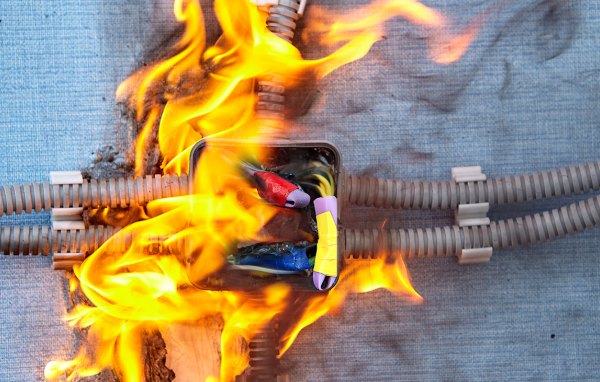
Circuit integrity under fire conditions remains critical. Failure of cabling can lead to loss of alarms, smoke control, emergency lighting and communication systems. The length of time cables maintain functionality directly affects the available and critical period for evacuation and emergency response.
In modern high-occupancy settings, particularly those using phased evacuation, system resilience design and installation should reflect a more realistic potential incident duration rather than legacy assumptions and design.
Extending Circuit Integrity to 180 Minutes
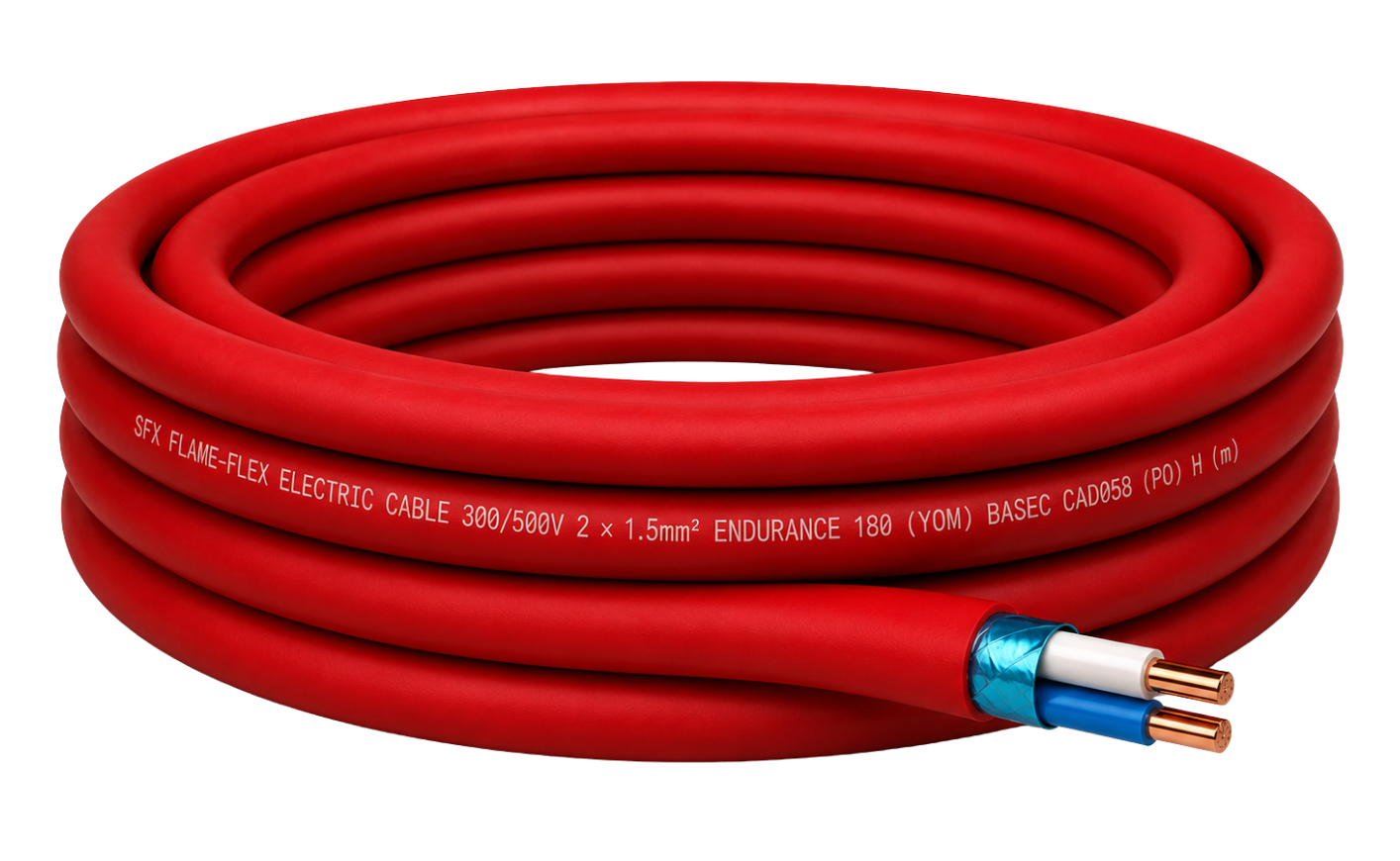
In response to the changing demands, and the further stimulus to drive urbanisation and smart buildings, Securi-Flex has developed Endurance 180®, a 180-minute fire-resistant cable designed and developed in conjunction with BASEC under a Certificate of Assessed Design (CAD). The Endurance 180® introduces modified and improved testing processes and standards within the framework of BS 7629-1 2015 + A1 2019, BS EN 60332-1, BS EN 61034-2, BS EN 60754-1, BS 6387 (CWZ), BS EN 50200, BS 8434-2, BS, BS5839-1, EN 50200 & BS 8519.
Supported via BASEC, with independent testing, the successful development of this CAD (CAD058) and its potential adoption into the BSI represents a significant change in performance standards and an extension beyond traditional 30, 60 and 120-minute performance standards currently on the market
Increasing fire resistance to 180 minutes is not a marginal improvement but a threefold extension in circuit integrity. In practical terms, this supports continued operation of:
- Fire detection and alarm systems
- Emergency voice communication
- Smoke extraction and pressurisation systems
- Firefighting lifts
- Emergency lighting
In high-occupancy buildings, where evacuation may be staged and firefighting operations prolonged, this extended performance provides additional resilience.
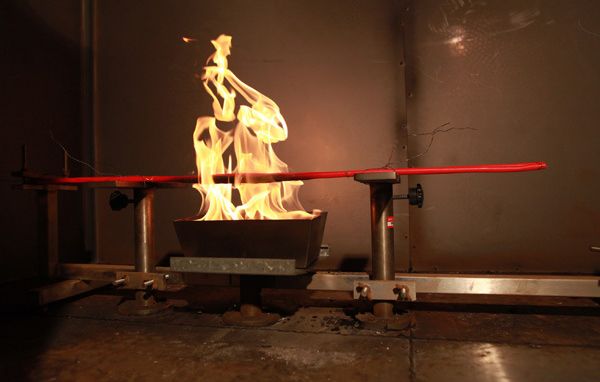
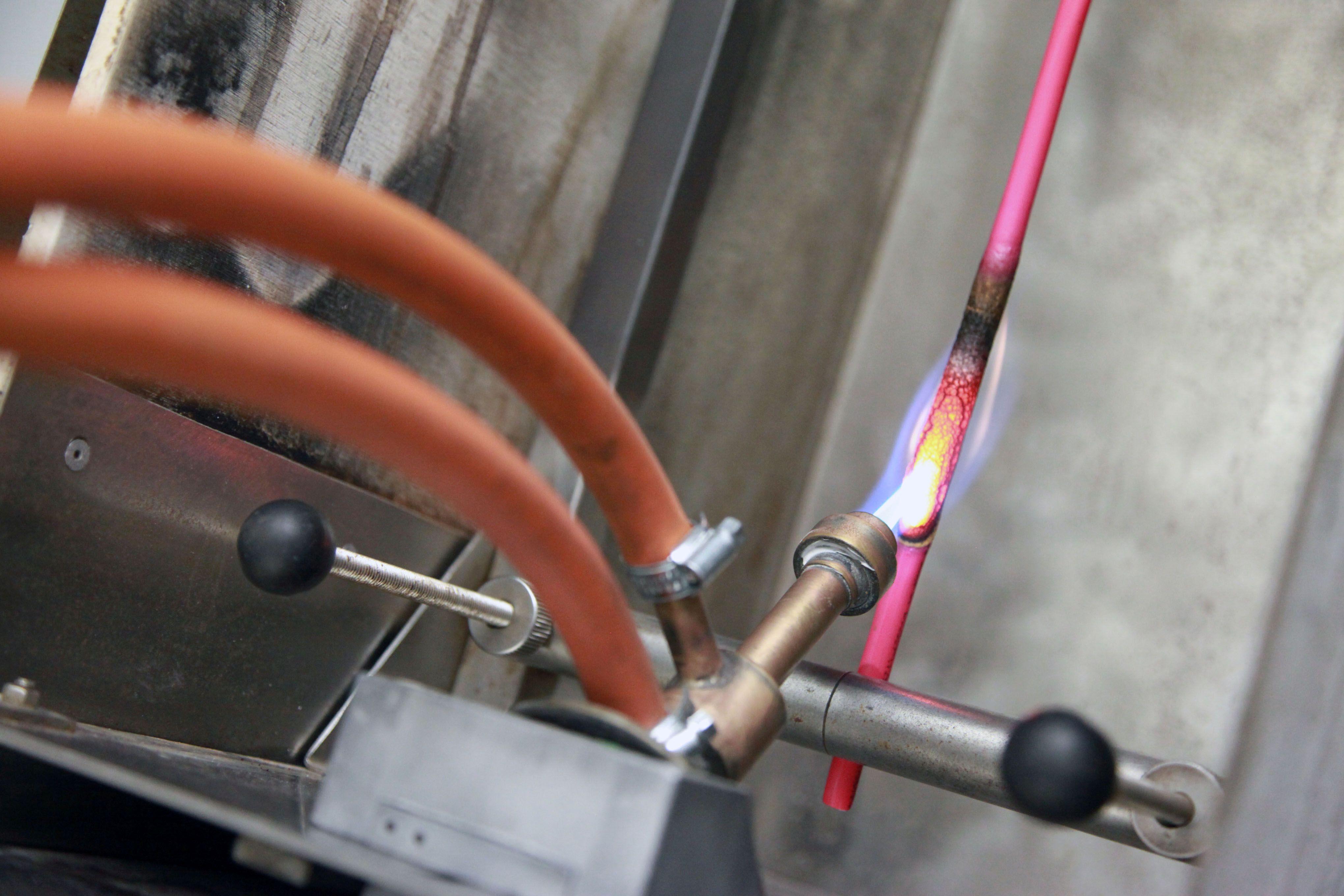
Independent verification has been central to the development process. Securi-Flex’s CAD058 developed in line with BS 7629‑1:2015, exceeds the standard’s current 120‑minute (Enhanced) fire‑survival requirement through a unique, purpose‑engineered design that enhances performance under fire conditions. In addition, a bespoke test plan was specifically developed to accommodate an extended 180‑minute fire‑survival performance, with testing carried out at BASEC's Laboratory in Milton Keynes.

Aligning with Regulatory and Engineering Evolution
The regulatory framework for higher-occupancy buildings has evolved considerably in recent years. The Building Safety Act 2022 has strengthened accountability across design, construction and occupation, particularly for buildings over 18 metres or seven storeys.
At the same time, fire engineering has increasingly adopted performance-based approaches, incorporating evacuation modelling, smoke analysis and conservative safety margins. Within this context, the resilience of supporting infrastructure, including cabling, forms part of the overall safety justification.
Although 180-minute fire-resistant performance is not currently mandated, the direction of regulatory and engineering practice suggests increasing scrutiny of system robustness.
The development of Endurance 180® reflects a proactive response to the evolving demands of modern buildings, where life safety and circuit integrity are critical. It is intended to help drive higher performance expectations and support informed industry discussion on whether existing baseline standards remain fit for purpose.
High-Rise Growth and Long-Term Infrastructure Decisions
With nearly half of the UK’s tallest buildings completed after 2018 and the majority of future developments being residential, today’s specification decisions carry long-term implications.
Unlike more visible fire protection measures, cabling is embedded within the building fabric and difficult to replace without significant disruption. Specifying higher-performance fire-resistant cabling during construction is therefore a strategic decision that can influence building resilience for decades and support long term cost optimisation in both and retrofit/replacement scenarios.
As approximately 100,000 new high-rise homes move through planning and delivery, there is an opportunity to reassess whether existing survival durations remain appropriate for contemporary building forms.
Moving Beyond Minimum Compliance
Compliance remains the foundation of fire safety design, but it does not always equate to optimal resilience.
Advances in life safety products often precede updates to formal standards. Higher performance levels typically emerge in response to evolving building design and risk understanding before becoming formally adopted and specified.
The introduction of Endurance 180®-minute fire-resistant cabling reflects this shift toward resilience-led thinking
Extended fire survival does not replace the need for comprehensive fire strategies, compartmentation or suppression systems. Instead, it enhances the reliability of critical systems during prolonged incidents, supporting both evacuation and firefighting operations.
A New Benchmark for Modern Buildings
As urban density increases and residential towers continue to define city skylines, the infrastructure supporting life safety systems must evolve in parallel.
Securi-Flex’s development of CAD in partnership with BASEC introduces a new performance benchmark, driving innovation in fire-resistant cabling and contributes to a broader industry discussion around resilience in high-rise environments.
The key consideration for designers and specifiers is no longer solely whether systems meet current standards, but whether they are sufficiently robust for the buildings now being delivered and lifetime integrity.
In a landscape shaped by vertical growth and heightened regulatory focus, extending fire survival expectations represents a logical progression in life safety design.
Grant Dixon, Managing Director of Securi-Flex, commented:
“The development of the Endurance 180® fire-resistant cable and its associated Cable Assessment Document (CAD), in collaboration with BASEC, represents a meaningful effort to enhance fire performance standards and system reliability. The objective has been to support the evolution of industry benchmarks, reduce installation and operational risk, and provide improved solutions that maintain circuit integrity under fire conditions. This initiative aligns with Securi-Flex’s commitment to advancing cable performance, supporting the industry with robust, standards-driven solutions, and contributing to the ongoing development of safer, more resilient building infrastructure.”
Matthew Sharman, Global Commercial Sales Manager at BASEC, commented
"High‑rise residential buildings have changed significantly, and the assumptions behind historic fire survival benchmarks no longer reflect today’s risks. Taller buildings, higher occupancy levels, and more complex life safety systems mean that critical circuits must remain operational for longer during a fire.
Through our third‑party testing and certification support of Securi‑Flex’s Endurance 180®, BASEC has helped validate performance beyond traditional 30, 60, and 120‑minute thresholds. This approach supports extended evacuation strategies and prolonged firefighting operations, increasing confidence in system resilience during the most critical phases of a fire incident."
To find out more about how a Certificate of Assessed Design can enhance your business, contact the team